
Friday, December 29, 2006

"By the very cogent anthropology of Judeo-Christianity, whether or not one agreed with it, human existence was by no means to be understood as the transaction of a higher organism satisfying this or that need from its environment---by being 'creative' or enjoying 'meaningful relationships'--- but as the journey of a wayfarer along life's way. The experience of alienation was thus not a symptom of maladaption (psychology) nor evidence of the absurdity of life (existentialism) nor an inevitable consequence of capitalism (Marx) nor the necessary dehumanization of technology (Ellul). Though the exacerbating influence of these forces was not denied, it was not to be forgotten that human alienation was first and last the homelessness of man who is not in fact at home.
The Judeo-Christian anthropology was cogent enough, too, to accommodate the several topical alienations of the twentieth century. The difficulty was that in order to accept this anthropology of alienation one had also to accept the notion of an aboriginal catastrophe or Fall, a stumbling block which to both the scientist and the humanist seems even more bizarre than a theology of God, the Jews, Christ, and the Church.
So the scientists and humanists got rid of the Fall and re-entered Eden, where scientists know like angels, and laymen prosper in good environments, and ethical democracies progress through education. But in so doing they somehow deprived themselves of the means of understanding and averting the dread catastrophes which were to overtake Eden and of dealing with those perverse and ungrateful beneficiaries of science and ethics who preferred to eat lotus like the Laodiceans or roam the dark and violent world like Ishmael or Cain.
Then Eden turned into the twentieth century."
-----Walker Percy, from "The Delta Factor", in "The Message in the Bottle."
Tuesday, December 19, 2006

"Since the modern world began in the sixteenth century, nobody's system of philosophy has really corresponded to everybody's sense of reality; to what, if left to themselves, common men would call common sense. Each started with a paradox; a peculiar point of view demanding the sacrifice of what they would call a sane point of view. That is the one thing common to Hobbes and Hegel, to Kant and Bergson, to Berkeley and William James. A man had to believe something that no normal man would believe, if it were suddenly propounded to his simplicity: as that law is above right, or right is outside reason, or things are only as we think them, or everything is relative to a reality that is not there. The modern philosopher claims, like a sort of confidence man, that if once we will grant him this, the rest will be easy; he will straighten out the world, if once he is allowed to give this one twist to the mind. . . . Of [such] philosophies it is strictly true that their followers work in spite of them, or do not work at all. No skeptics work skeptically; no fatalists work fatalistically; all without exception work on the principle that it is possible to assume what it is not possible to believe. No materialist who thinks his mind was made up for him by mud and blood and heredity, has any hesitation in making up his mind. No skeptic who believes truth is subjective has any hesitation about treating it as objective."
-----G. K. Chesterton, "St. Thomas Acquinas: The Dumb Ox"
Saturday, December 02, 2006

"Only Jesus himself is the truth, the whole story of him. He will not let us settle for any truth less than that, tidier than that, easier than that. And the truth seems to be that if he is indeed everybody's best friend the way the old Jesus hymns proclaim, he is at the same time everybody's worst enemy. He is the enemy, at least, of everything in us that keeps us from giving him what he is really after. And what he is really after is our heart's blood, our treasure, our selves themselves. It is the cross he is inviting us to, not a Sunday school picnic, and therefore it is proper to rejoice in his presence, it is proper also to be scared stiff in his presence.
He tells us not to be this or that, but to be his. Not to follow this way or that way, but to follow him. He promises to give us everything and in return asks us to give up everything the way he himself gave up everything---that is his story. And only then the miracle that not even all our tragic and befuddled history has ever quite managed to destroy. Only then the miracle of you and me not just talking about him two thousand years later but holding on to him for dear life, believing from time to time that he is the one the one we draw dear life from, dearest life. That is his story too, and of course it is also our story.
Either life is holy with meaning, or life doesn't mean a damn thing. You pay your money and you take your choice. Only never take your choice too easily, of course. Never assume that because you have taken it one way today, you may not take it another way tomorrow."
-----Frederick Buechner, from "The Truth of Stories"
Monday, November 27, 2006

Thursday, November 09, 2006

"Being, belief and reason are pure relations, which cannot be dealt with absolutely, and are not things but pure scholastic concepts, signs for understanding, not for worshipping, aids to awaken our attention, not to fetter it."
"Every philosophy consists of certain and uncertain knowledge, of idealism and realism, of sensuousness and deductions. Why should only the uncertain be called belief? "
-----Johann Georg Hamann, from "Kleeblatt Hellenistischer Briefe"
Sunday, October 29, 2006

"The majority [of people today] are left with their two poor values of personal peace and affluence. With such values, will men stand for their liberties? Will they not give up their liberties step by step, inch by inch, as long as their own personal peace and prosperity is sustained and not challenged, and as long as the goods are delivered?
And since personal peace and affluence are so often the only values that count with the majority, politicians know that to be elected they must promise these things. Politics has largely become not a matter of ideals--increasingly men and women are not stirred by the values of liberty and truth--but of supplying a constituency with a frosting of personal peace and affluence. They know that voices will not be raised as long as people have these things, or at least an illusion of them.
Edward Gibbon, in his Decline and Fall of the Roman Empire, said that the following five attributes marked Rome at its end: first, a mounting love of show and luxury (that is, affluence); second, a widening gap between the very rich and the very poor; third, an obsession with sex; fourth, freakishness in the arts, masquerading as originality, and enthusiasms pretending to be creativity; fifth, an increased desire to live off the state. It all sounds so familar. We have come a long road since our first chapter, and we are back in Rome."
-----Francis A. Schaeffer, from "How Should We Then Live?: The Rise and Decline of Western Thought Culture" circa 1976
Friday, October 13, 2006

"Many problems are now reserved for an ecumenical council. It would be better to defer questions of this sort to the time when no longer in a glass darkly we see God face to face....
Formerly, faith was in life rather than in the profession of creeds. Presently, necessity required that articles be drawn up, but only a few with Apostolic sobriety. Then the depravity of the heretics exacted a more precise scrutiny of the divine books....
When faith came to be in writings rather than in hearts, then there were almost as many faiths as men. Articles increased and sincerity decreased. Contention grew hot and love grew cold. The doctrine of Christ, which at first knew no hairsplitting, came to depend on the aid of philosophy. This was the first stage in the fall of the church....
The injection of the authority of the emperor into this affair did not greatly aid the sincerity of the faith....
When faith is in the mouth rather than in the heart, when the solid knowledge of Sacred Scripture fails us, nevertheless by terrorization we drive men to believe what they do not believe, to love what they do not love, to know what they do not know. That which is forced cannot be sincere, and that which is not voluntary cannot please Christ."
-----Desiderius Erasmus, from his preface to Hilary
Tuesday, October 10, 2006
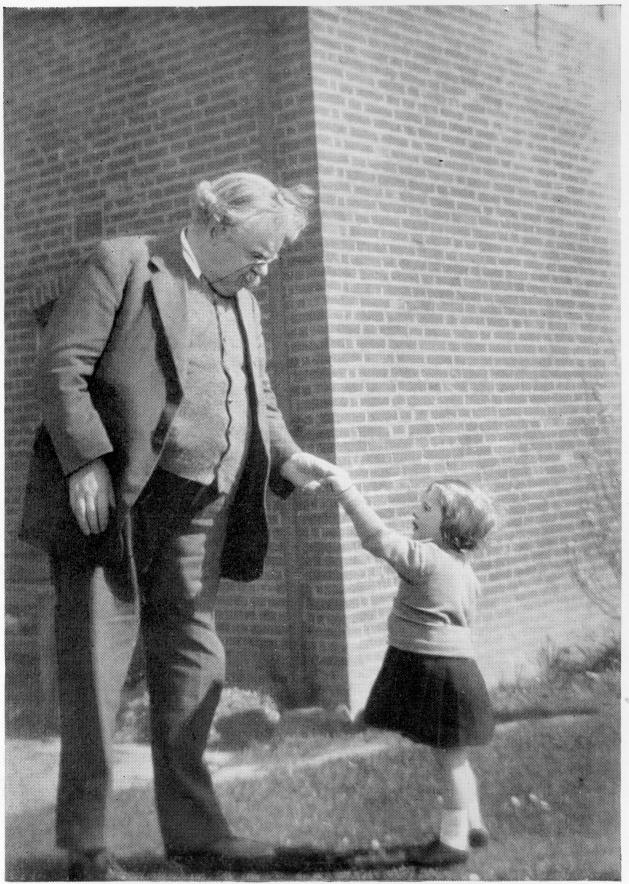
I think it's one of the last great ironies that the conservatives are appropriating 1950's lit-department philosophy and turning it back on the liberals, essentially beating them at their own game with their own philosophy. It's all very Chestertonian. . .Colbert's comment below says it all.
“Language has always been important in politics, but language is incredibly important to the present political struggle,” Colbert says. “Because if you can establish an atmosphere in which information doesn’t mean anything, then there is no objective reality. The first show we did, a year ago, was our thesis statement: What you wish to be true is all that matters, regardless of the facts. Of course, at the time, we thought we were being farcical.”
-----Stephen Colbert, from an interview with New York Magazine
"The strongest saints and the strongest skeptics alike took positive evil as the starting point of their argument....if it be true (as it certainly is) that a man can feel exquisite happiness skinning a cat, then the religious philosopher can make one or two deductions. He must either deny the existence of God, as all atheists do; or he must deny the present union between God and man, as all Christians do. The new theologians seem to think it a highly rationalistic solution to deny the cat."
-----G.K. Chesterton, from "Orthodoxy"
Saturday, September 30, 2006

"Does it matter whether you hate yourself? At least love your eyes that can see, your mind that can hear the music, the thunder of the wings."
-----Robinson Jeffers
"A strange thing happened to me today. I saw a thundercloud move down over Half Dome, and it was so big and clear and brilliant that it made me see many things that were drifting around inside of me; things that relate to those who are loved and those who are real friends.
For the first time I know what love is; what friends are; and what art should be.
Love is a seeking for a way of life; the way that cannot be followed alone; the resonance of all spiritual and physical things....
Friendship is another form of love -- more passive perhaps, but full of the transmitting and acceptances of things like thunderclouds and grass and the clean granite of reality.
Art is both love and friendship and understanding: the desire to give. It is not charity, which is the giving of things. It is more than kindness, which is the giving of self. It is both the taking and giving of beauty, the turning out to the light of the inner folds of the awareness of the spirit. It is a recreation on another plane of the realities of the world; the tragic and wonderful realities of earth and men, and of all the interrelations of these."
-----Ansel Adams, in a letter to his friend, Cedric Wright, June 10th 1937
Tuesday, September 19, 2006
"Well, but mustn't the churches adapt Christianity to suit the ideas of our time? No, they must not. Our ideas are killing us spiritually. When your child swallows poison, you don't sit around thinking of ways to adapt his constitution to a poisonous diet. You give him an emetic."
-----Joy Davidman, from "Smoke on the Mountain: An Interpretation of the Ten Commandments"
-----Joy Davidman, from "Smoke on the Mountain: An Interpretation of the Ten Commandments"
Thursday, September 14, 2006
Sunday, August 27, 2006
The Op-Ed by David Brooks in the NYT today said what I've been thinking for some time about the nascent popularity of tattoos. Here are some excerpts from the piece entitled Nonconformity Is Skin Deep:
"The problem is that middle-class types have been appropriating the symbols of marginalized outcasts since at least the 1830's. This is no longer a way to express individuality; it's a way to be a part of the mob. Today, fashion trends may originate on Death Row, but it takes about a week and a half for baggy jeans, slut styles and tattoos to migrate from Death Row to Wal-Mart.
What you get is a culture of trompe l'oeil degeneracy. People adopt socially acceptable transgressions---like tattoos---to show they are edgy, but inside they are still middle class. You run into these candy-cane grunge types: people with piercings and inkings all over their bodies who look like Sid Viscious but talk like Barry Manilow. They've got the alienated look---just not the anger.
And that's about the most delightful thing about the whole tattoo fad. A cadre of fashion-forward types thought that they were doing something to separate themselves from the vanilla middle classes but are now discovering the signs etched into their skins are absolutely mainstream. They are at the beach looking across the acres of similar markings and learning there is nothing more conformist than displays of individuality, nothing more risk-free than rebellion, nothing more conservative than youth culture.
Another generation of hipsters laid low by the ironies of consumerism."
-----David Brooks, 8/27/06 NYT
"The problem is that middle-class types have been appropriating the symbols of marginalized outcasts since at least the 1830's. This is no longer a way to express individuality; it's a way to be a part of the mob. Today, fashion trends may originate on Death Row, but it takes about a week and a half for baggy jeans, slut styles and tattoos to migrate from Death Row to Wal-Mart.
What you get is a culture of trompe l'oeil degeneracy. People adopt socially acceptable transgressions---like tattoos---to show they are edgy, but inside they are still middle class. You run into these candy-cane grunge types: people with piercings and inkings all over their bodies who look like Sid Viscious but talk like Barry Manilow. They've got the alienated look---just not the anger.
And that's about the most delightful thing about the whole tattoo fad. A cadre of fashion-forward types thought that they were doing something to separate themselves from the vanilla middle classes but are now discovering the signs etched into their skins are absolutely mainstream. They are at the beach looking across the acres of similar markings and learning there is nothing more conformist than displays of individuality, nothing more risk-free than rebellion, nothing more conservative than youth culture.
Another generation of hipsters laid low by the ironies of consumerism."
-----David Brooks, 8/27/06 NYT
Wednesday, August 23, 2006
"I love my church, and I'm a Catholic who was raised by intellectuals who were very devout. I was raised to believe that you could question the church and still be a Catholic. What is worthy of satire is the misuse of religion for destructive or political gains. That's totally different from the Word, the blood, the body, and the Christ. His kingdom is not of this earth."
----- Stephen Colbert
----- Stephen Colbert
Tuesday, July 25, 2006
"America is a culture of mass consumerism and an ideology of privatized self fulfillment. . . .A climate of this kind is not well suited to extending American democracy to other parts of the world because it lacks the higher-order principles that serve as the foundation for morality, decency and the resolve to sacrifice self-interest for the good of others. This consumerism and privatization undermines the very institutional basis of democracy.
It is a strange time for America to take on the responsibilities of empire. A time when our own society from the family to the corporation shows signs of deep inner incoherence."
-----Robert Wuthnow, Princeton Professor of Sociology, from his speech at Vanderbilt entitled "In America, All Religions are True: Implications of the New Pluralism for Democracy"
It is a strange time for America to take on the responsibilities of empire. A time when our own society from the family to the corporation shows signs of deep inner incoherence."
-----Robert Wuthnow, Princeton Professor of Sociology, from his speech at Vanderbilt entitled "In America, All Religions are True: Implications of the New Pluralism for Democracy"
Monday, July 10, 2006
Quotations from "All The King's Men"
"How life is strange and changeful, and the crystal is in the steel at the point of fracture, and the toad bears a jewel in its forehead, and the meaning of moments passes like the breeze that scarcely ruffles the leaf of the willow." p.26
"'Wanting don't make a thing true. You don't have to live forever to figure that out.' That was so true I didn't reckon it was worthwhile even to agree with him." p.117
"Maybe the things you want are like cards. you don't want them for themselves, really, though you think you do. You don't want a card because you want the card, but because in a perfectly arbitray system of rules and values and in a special combination of which you already hold a part the card has meaning. But suppose you aren't sitting in the game. Then, even if you do know the rules, a card doesn't mean a thing. They all look alike.. . .for God and Nothing have a lot in common. You look either of Them straight in the eye for a second and the immediate effect on the human constitution is the same." p149-150
"We see a great many things and can remember a great many things, but that is different. We get very few of the true images in our heads of the kind I'm talking about, the kind that become more and more vivid for us as if the passage of the years did not obscure their reality, but, year by year, drew off another veil to expose a meaning which we had only dimly surmised at first. Very probably the last veil will not be removed, for there are not enough years, but the brightness of the image increases and our conviction increases that the brightness is meaning, or the lengend of meaning, and without the image our lives would be nothing except an old piece of film rolled on a spool and thrown into a desk drawer among the unanswered letters." p177
"Man is conceived in sin and born in corruption and he passeth from the stink of the didie to the stench of the shroud." p.235
"Man is prone to evil as the sparks fly upward." p.242
"Some summer bastard in white flannel pants with vowels that clicked like dominoes." p.451
"That is was why I came to lie on a bed in a hotel in Long Beach, CA, on the last coast amid the grandeurs of nature. For that is where you come, after you have crossed oceans and eaten stale biscuits while prisoned forty days and nights in a storm-tossed rat-trap, after you have sweated in the greenery and heard the savage whoop, after you have built cabins and citites and bridged rivers, after you have lain with women and scattered children like millet seed in a high wind, after you have composed resonant documents, made noble speeches, and bathed your arms in blood to the elbows, after you have shaken with malaria in the marshes and in the icy wind across the high plains. That is where you come, to lie alone in a bed in a hotel room in Long Beach, CA. Where I lay, while outside my window a neon sign flickered on and off to the time of my heart, systole and diastole, flushing and flushing again the gray sea mist with a tint like blood. I lay there, having drowned in West, my body having drifted down to lie there in the comforting, subliminal ooze on the sea floor of History." p464-465
"I had not understood then what I think I have now come to understand: that we can keep the past only by having the future, for they are forever tied together." p.467
"For the truth is a terrible thing. You dabble your foot in it and it is nothing. But you walk a little farther and you feel it pull you like an undertow or a whirlpool. First there is the slow pull so steady and gradual you scarcely notice it, then the acceleration, then the dizzy whirl and plunge to blackness. For there is a blackness of truth, too. They say it is a terrible thing to fall into the Grace of God. I am prepared to believe that." p.516
"For either killing or creating may be a crime punishable by death, and the death always comes by the criminal's own hand and every man is a suicide. If a man knew how to live he would never die." p.531
"If anything is certain it is that no story is ever over, for the story which we think is over is only a chapter in a story which will not be over, and it isn't the game that is over, it is just an inning, and that game has a lot more than nine innings. When the game stops it will be called on account of darkness. But it is a long day." p534
"There is nothing women love so much as the drunkard, the hellion, the roarer, the reprobate. They love him because they---women, I mean---are like the bees in Samson's parable in the Bible: they like to build their honeycomb in the carcass of a dead lion....Out of the strong shall come forth sweetness." p.550
"Reality is not a function of the event as event, but of the relationship of that event to past, and future, events. We seem here to have a paradox: that the reality of an event, which is not real in itself, arises from other events which, likewise, in themselve are not real. But this only affirms what we must affirm: that direction is all. And only as we realize this do we live, for our own identity is dependent upon this principle." p.578
"The creation of man whom God in his foreknowledge knew doomed to sin was the awful index of God's omnipotence. For it would have been a thing of trifling and contemptible ease for Perfection to create mere perfection. To do so would, to speak truth, be not creation but extension. Separateness is identity and the only way for God to create, truly create, man was to make him separate from God Himself, and to be separate from God is to be sinful. The creation of evil is therefore the index of God's glory and His power. That had to be so that the creation of good might be the index of man's glory and power. But by God's help. By His help and in His wisdom." p.659
"A man's virtue may be but the defect of his desire, as his crime may be but the function of his virtue." p.660
"Soon now we shall go out of the house and go into the convulsion of the world, out of history into history and the awful responsibility of Time." p.661
"How life is strange and changeful, and the crystal is in the steel at the point of fracture, and the toad bears a jewel in its forehead, and the meaning of moments passes like the breeze that scarcely ruffles the leaf of the willow." p.26
"'Wanting don't make a thing true. You don't have to live forever to figure that out.' That was so true I didn't reckon it was worthwhile even to agree with him." p.117
"Maybe the things you want are like cards. you don't want them for themselves, really, though you think you do. You don't want a card because you want the card, but because in a perfectly arbitray system of rules and values and in a special combination of which you already hold a part the card has meaning. But suppose you aren't sitting in the game. Then, even if you do know the rules, a card doesn't mean a thing. They all look alike.. . .for God and Nothing have a lot in common. You look either of Them straight in the eye for a second and the immediate effect on the human constitution is the same." p149-150
"We see a great many things and can remember a great many things, but that is different. We get very few of the true images in our heads of the kind I'm talking about, the kind that become more and more vivid for us as if the passage of the years did not obscure their reality, but, year by year, drew off another veil to expose a meaning which we had only dimly surmised at first. Very probably the last veil will not be removed, for there are not enough years, but the brightness of the image increases and our conviction increases that the brightness is meaning, or the lengend of meaning, and without the image our lives would be nothing except an old piece of film rolled on a spool and thrown into a desk drawer among the unanswered letters." p177
"Man is conceived in sin and born in corruption and he passeth from the stink of the didie to the stench of the shroud." p.235
"Man is prone to evil as the sparks fly upward." p.242
"Some summer bastard in white flannel pants with vowels that clicked like dominoes." p.451
"That is was why I came to lie on a bed in a hotel in Long Beach, CA, on the last coast amid the grandeurs of nature. For that is where you come, after you have crossed oceans and eaten stale biscuits while prisoned forty days and nights in a storm-tossed rat-trap, after you have sweated in the greenery and heard the savage whoop, after you have built cabins and citites and bridged rivers, after you have lain with women and scattered children like millet seed in a high wind, after you have composed resonant documents, made noble speeches, and bathed your arms in blood to the elbows, after you have shaken with malaria in the marshes and in the icy wind across the high plains. That is where you come, to lie alone in a bed in a hotel room in Long Beach, CA. Where I lay, while outside my window a neon sign flickered on and off to the time of my heart, systole and diastole, flushing and flushing again the gray sea mist with a tint like blood. I lay there, having drowned in West, my body having drifted down to lie there in the comforting, subliminal ooze on the sea floor of History." p464-465
"I had not understood then what I think I have now come to understand: that we can keep the past only by having the future, for they are forever tied together." p.467
"For the truth is a terrible thing. You dabble your foot in it and it is nothing. But you walk a little farther and you feel it pull you like an undertow or a whirlpool. First there is the slow pull so steady and gradual you scarcely notice it, then the acceleration, then the dizzy whirl and plunge to blackness. For there is a blackness of truth, too. They say it is a terrible thing to fall into the Grace of God. I am prepared to believe that." p.516
"For either killing or creating may be a crime punishable by death, and the death always comes by the criminal's own hand and every man is a suicide. If a man knew how to live he would never die." p.531
"If anything is certain it is that no story is ever over, for the story which we think is over is only a chapter in a story which will not be over, and it isn't the game that is over, it is just an inning, and that game has a lot more than nine innings. When the game stops it will be called on account of darkness. But it is a long day." p534
"There is nothing women love so much as the drunkard, the hellion, the roarer, the reprobate. They love him because they---women, I mean---are like the bees in Samson's parable in the Bible: they like to build their honeycomb in the carcass of a dead lion....Out of the strong shall come forth sweetness." p.550
"Reality is not a function of the event as event, but of the relationship of that event to past, and future, events. We seem here to have a paradox: that the reality of an event, which is not real in itself, arises from other events which, likewise, in themselve are not real. But this only affirms what we must affirm: that direction is all. And only as we realize this do we live, for our own identity is dependent upon this principle." p.578
"The creation of man whom God in his foreknowledge knew doomed to sin was the awful index of God's omnipotence. For it would have been a thing of trifling and contemptible ease for Perfection to create mere perfection. To do so would, to speak truth, be not creation but extension. Separateness is identity and the only way for God to create, truly create, man was to make him separate from God Himself, and to be separate from God is to be sinful. The creation of evil is therefore the index of God's glory and His power. That had to be so that the creation of good might be the index of man's glory and power. But by God's help. By His help and in His wisdom." p.659
"A man's virtue may be but the defect of his desire, as his crime may be but the function of his virtue." p.660
"Soon now we shall go out of the house and go into the convulsion of the world, out of history into history and the awful responsibility of Time." p.661
Friday, July 07, 2006

My favorite place to eat in Buffalo, NY is "Charlie The Butcher" for some Beef on Weck. Beef on Weck, for the uninitiated, is thinly sliced roast beef on Kimmelweck bread. The only way I can describe Kimmelweck is to say it's like french bread, but more chewy, with lots of salt sort of embedded into the top. Sarah is mortified that I eat at Charlie's nearly every day when I go to Buffalo. I can't get enough of the stuff.
Sunday, July 02, 2006

A little Karl Barth for your Sabbath.
Barth held that the true church had it's existence in some sense separate from the human institution because of the natural opposition of the Gospel to the church as human institution. Yet paradoxically this didn't lead him to advocate non-participation in the institution. As I understand it, for Barth, the failures of the institution preclude us from ever fully putting our trust in it, and warrant an ever-skeptical eye, but the presence of the True church (of which Christ is the head, the one visible only through the power of the Holy Spirit) in the midst of the institution warrants our acceptance and participation. As Timothy George points out in the latest issue of Touchstone, for Barth "it was necessary to be so decisively against the Church precisely in order to be so unreservedly for it....only by sharing the church's anguish are we able to pray for revival and work for reformation."
"We must not, because we are fully aware of the eternal opposition between the Gospel and the church (institution), hold ourselves aloof from the church or break up its solidarity; but rather, participating in its responsibility and sharing the guilt of its inevitable failure, we should accept it and cling to it."
"He who hears the gospel and proclaims it.....knows that the church means suffering and not triumph....He sees the inadequacy of the church growing apace, not because of its weakneess and lack of influence, not because it is out of touch with the world; but, on the contrary because of the pluck and force of its wholly utilitarian and hedonistic illusions, because of its very great success, and because of the skill with which it trims its sails to the changing fashions of the world."
-----Karl Barth, from his commentary "Romans"
Subscribe to:
Posts (Atom)
